Archives
- 2026-09
- 2026-08
- 2026-07
- 2026-06
- 2026-05
- 2026-04
- 2026-03
- 2026-02
- 2026-01
- 2025-12
- 2025-11
- 2025-10
- 2025-03
- 2025-02
- 2025-01
- 2024-12
- 2024-11
- 2024-10
- 2024-09
- 2024-08
- 2024-07
- 2024-06
- 2024-05
- 2024-04
- 2024-03
- 2024-02
- 2024-01
- 2023-12
- 2023-11
- 2023-10
- 2023-09
- 2023-08
- 2023-07
- 2023-06
- 2023-05
- 2023-04
- 2023-03
- 2023-02
- 2023-01
- 2022-12
- 2022-11
- 2022-10
- 2022-09
- 2022-08
- 2022-07
- 2022-06
- 2022-05
- 2022-04
- 2022-03
- 2022-02
- 2022-01
-
During the course of angiogenesis the overactivated
2024-09-19
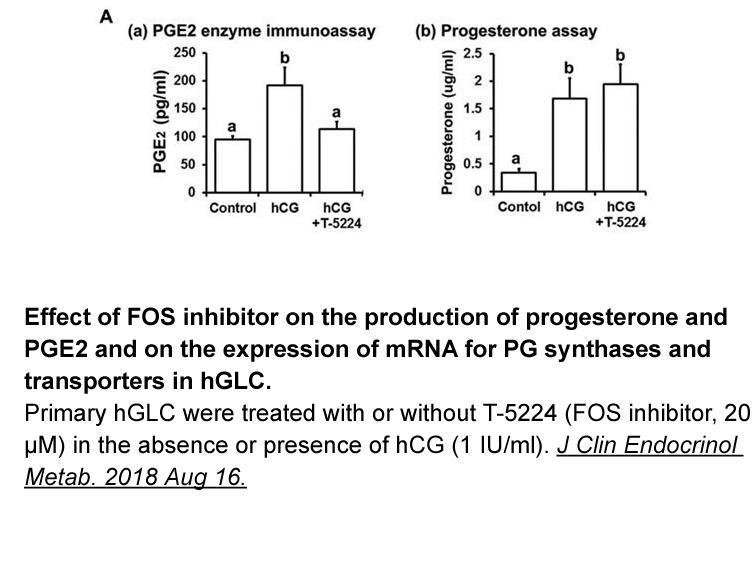
During the course of angiogenesis, the overactivated angiogenic stimulators are responsible for carrying out abnormal proliferation in the retinal microvasculature, resulting in the formation of various immature blood vessels. These newly formed blood vessels become the prime spots for leakage of th
-
Kuda et al reported that
2024-09-18

Kuda et al. (1997) reported that the activity of aminopeptidase A (ApA) but not aminopeptidase B (ApB) nor aminopeptidase N (ApN) was decreased in plasma from patients with Alzheimer's disease (AD). More recently Puertas et al. (2013) reported that the activities of plasma ApA, ApB, ApN and IRAP wer
-
COPD is almost unheard of in individuals less than
2024-09-18

COPD is almost unheard of in individuals less than 40 years of age (even among heavy smokers), 1 in 10 lifetime never-smokers and 1 in 3 develop COPD by age 75 [26], unquestionably, COPD is an age-related disorder. This notion of accelerated ageing of COPD is supported by animal models, which demons
-
br Conclusions Several lines of evidence have been establish
2024-09-18
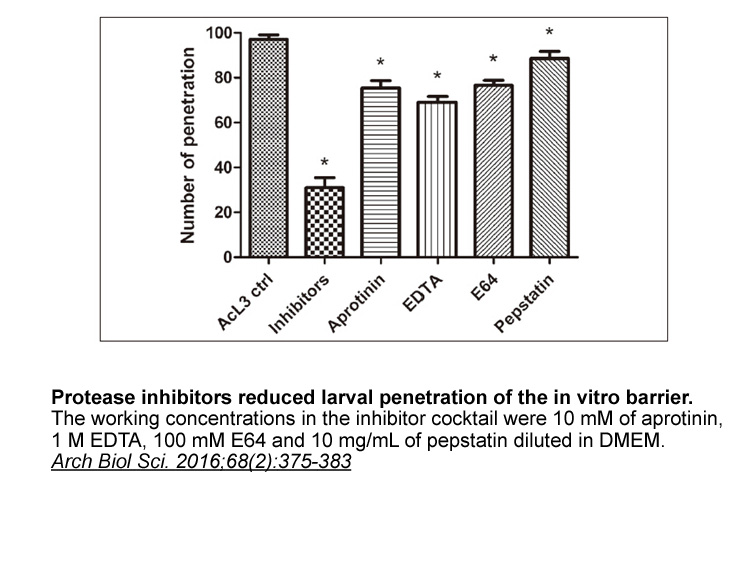
Conclusions Several lines of evidence have been established, which support the adenosine kinase hypothesis of epileptogenesis, which is based on a sequence of events leading from acute ret inhibitor injury to initial downregulation of ADK, rise in extracellular adenosine, changes in astrocytic a
-
br Conclusions The following are the supplementary data
2024-09-18
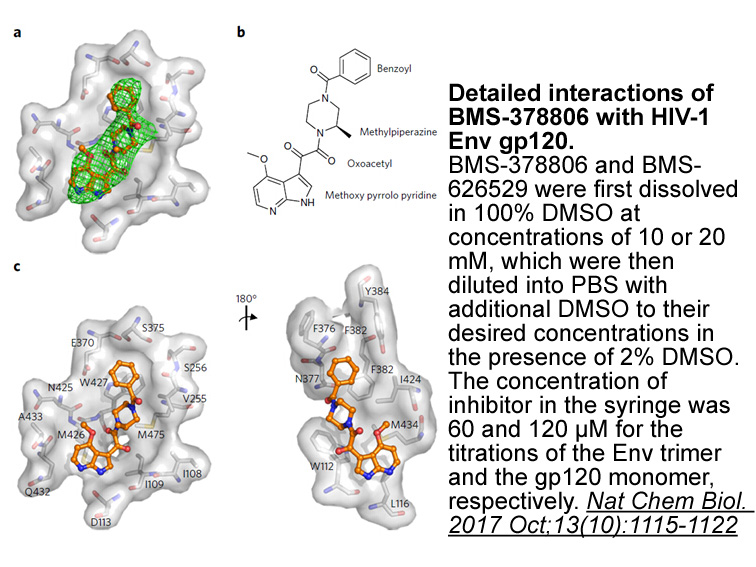
Conclusions The following are the supplementary data related to this article. Author contributions Conflict of interest Funding sources This work was supported by the Canadian Institutes of Health Research [grant: MOP-79470]. Introduction Sperm cells undergo a number of physical and
-
br LOX in esophageal cancer Various studies suggest
2024-09-18
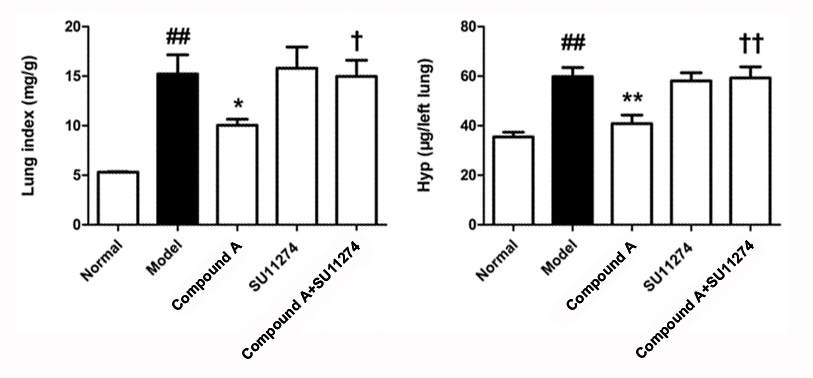
5-LOX in esophageal cancer Various studies suggest that abnormal levels of AA metabolites play an essential role in human esophageal adenocarcinogenesis (EAC). The key AA derivatives of 5-LOX signaling molecules namely include, 5-HETE, LTB4, and cysteinyl LTs, which are well-known to initiate inf
-
BCECF-AM br Cytochrome b br Cytochrome
2024-09-18
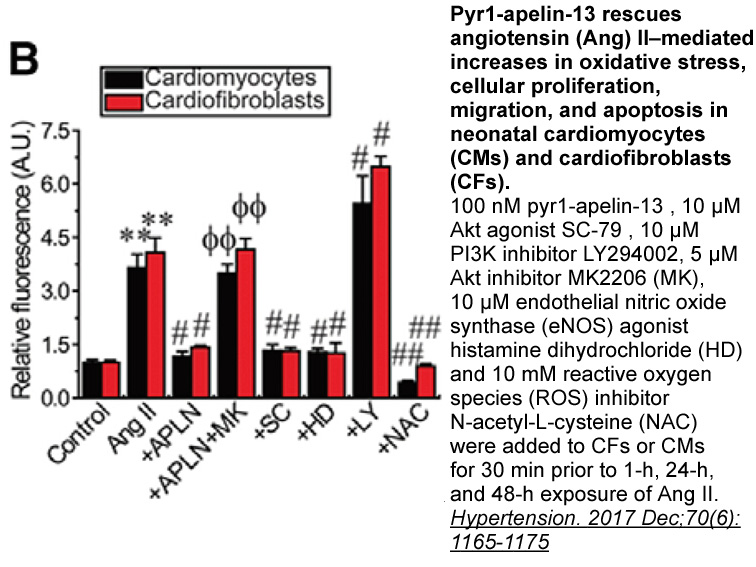
Cytochrome b5 Cytochrome P450 17α-hydroxylase/17,20-lyase (P450 17A1) A number of P450s involved in steroid biosynthesis are multifunctional as they carry out two or more sequential hydroxylation reactions on the same substrate(s). P450 17A1 is a dual function endoplasmic reticulum enzyme enco
-
br Results br Discussion The A nidulans Aurora kinase displa
2024-09-18
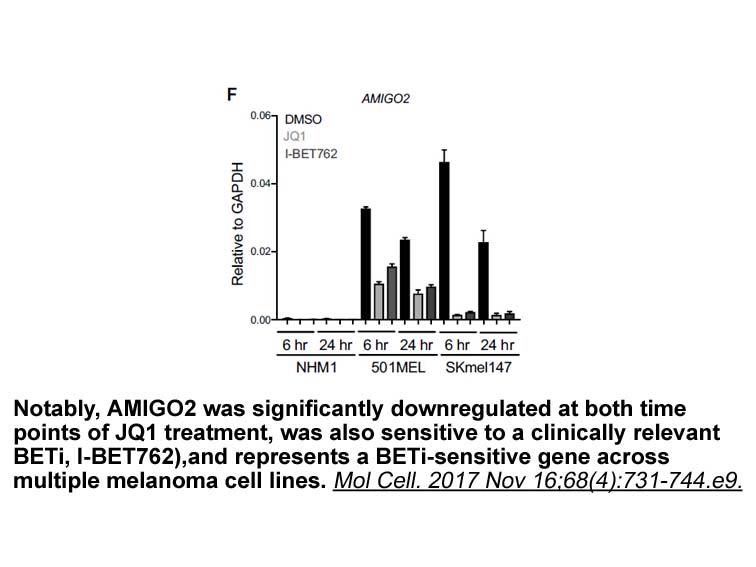
Results Discussion The A. nidulans Aurora kinase displays diverse locations during mitosis and we show here that it also locates to hyphal regions where septa subsequently form, to the septal pore region of newly formed septa and displays a Nicotinic Acid australia specific location to mature
-
br Results and discussion br Conclusion In
2024-09-18
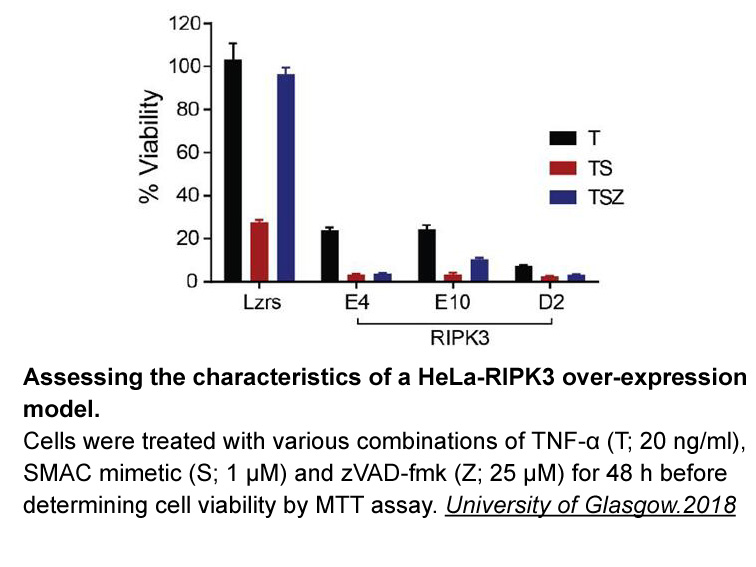
Results and discussion Conclusion In summary, a series of indazole-based derivatives were synthesized and SAR studies conducted, with view to the development of a novel Aurora kinases inhibitor. The carboxylic GSK2606414 group extending from the C-3 position of the aniline and substituted grou
-
Despite their different effects on cell survival the functio
2024-09-14
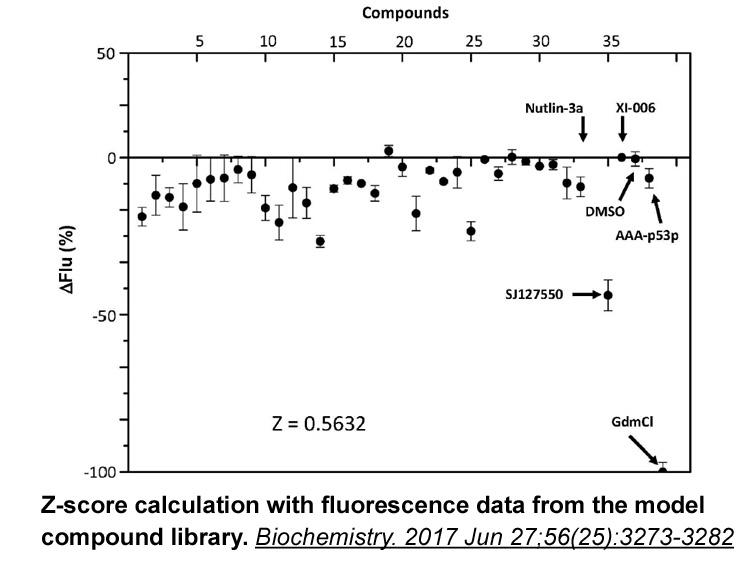
Despite their different effects on cell survival, the functions of autophagy and apoptosis are not completely independent. Additionally, Cho et al. (2009) suggested that the mediation of caspase-3 links the apoptotic and autophagic signaling pathways. Consequently, to illuminate the correlation, exc
-
Additional support for a role of
2024-09-14
Additional support for a role of HMGN1 in enhancing DNA repair comes from studies of transcription-coupled repair (TCR) in human cells. Lesions in the template strand of DNA induced by UV light stall the movement of RNA polymerase II (RNAPII) and interrupt transcription. Removal of these transcripti
-
Kuda et al reported that the
2024-09-14
Kuda et al. (1997) reported that the activity of aminopeptidase A (ApA) but not aminopeptidase B (ApB) nor aminopeptidase N (ApN) was decreased in plasma from patients with Alzheimer's disease (AD). More recently Puertas et al. (2013) reported that the activities of plasma ApA, ApB, ApN and IRAP wer
-
dhfr inhibitor br Concluding remarks The past decade has see
2024-09-14
Concluding remarks The past decade has seen rapid advances in our understanding of the metabolic reprogramming that occurs during tumorigenesis. Strategies to target specific nodes of cancer cell amino dhfr inhibitor metabolism have progressed from preclinical studies to clinical trials, and are
-
br Discussion In a series
2024-09-14
Discussion In a series of linear mixed effects models of longitudinal neuroanatomical change, we have identified genetic risk variants associated with an increase in psora shape asymmetry in AD. The closest genes associated with significant SNPs include BIN1 (rs6733839), CD2AP (rs10948363), and
-
We next developed a system for staging severity
2024-09-14
We next developed a system for staging severity. Our guiding principles were the following. Two types of information about the research participant are staged independently from each other: (1) grading disease severity using biomarkers and (2) grading the severity of cognitive impairment. Measures u
8033 records 115/536 page Previous Next First page 上5页 111112113114115 下5页 Last page